4 February 2026,
Wednesday


4 February 2026,
Wednesday
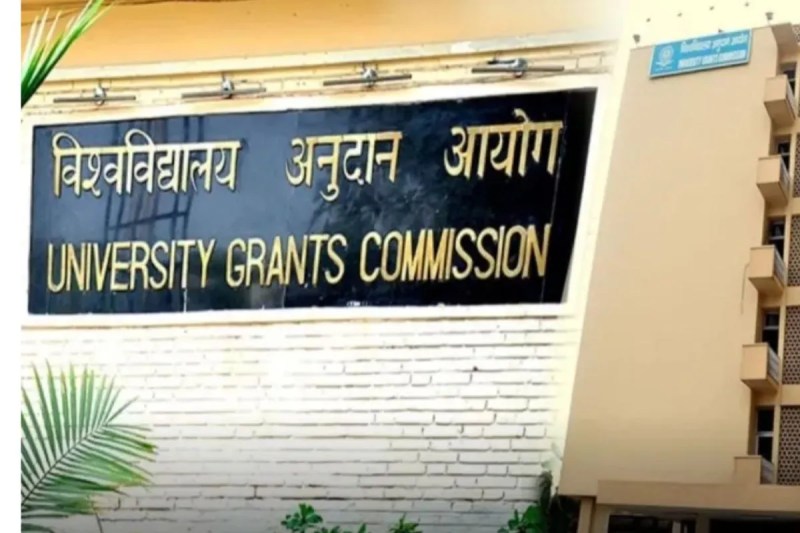
PhD Thesis Rejected: The University Grants Commission (UGC) has taken a strict stance against the misuse of technology in research. The UGC has rejected the PhD theses of dozens of students from BRABU (B.R. Ambedkar Bihar University), Muzaffarpur, Bihar. Investigations revealed that these students had used Artificial Intelligence (AI) to prepare their research work and had resorted to direct copy-pasting. The rejection of theses at BRABU is proof that rejections have now begun at the ground level due to these regulations.
According to the university's plagiarism cell, when these theses were checked with modern software, more than 40 per cent plagiarism was found. As per UGC's set standards, such a large amount of copied content is not acceptable. Prof. Sanjay Kumar, in charge of the Plagiarism Cell, stated that students whose theses were found to be flawed have now been instructed to rewrite their entire theses from scratch.
The highest number of cases of content theft using AI have been reported in these for the English subject. Experts say that plagiarism software has a special mathematical model that immediately detects plagiarism in the English language. Currently, fewer such discrepancies have been found in Hindi. The university's Vice-Chancellor, Prof. Dinesh Chandra Rai, has formed a separate cell in the university to check the quality of theses, which is meticulously examining every research paper.
While the scrutiny regarding these has increased, the university administration is considering providing lateral entry in the PhD Entrance Test (PAT) for students pursuing JRF (Junior Research Fellowship) in 2025. Several students have applied, demanding that since they have passed JRF, they should be given a direct enrollment opportunity. Additionally, to save an old student's JRF fellowship, Examination Controller Prof. Ram Kumar has assured the issuance of a provisional registration certificate so that the JRF does not lapse.
The UGC has tightened its regulations regarding plagiarism in PhD theses, under which strict action will be taken if more than 10 per cent plagiarism is found. If 40 to 60 per cent plagiarism is found in a thesis, the student may be barred from submitting research for one year, while registration will be permanently cancelled for more than 60 per cent plagiarism. Content copy-pasted from AI will now also be considered plagiarism, and universities are using modern software to detect it. If discrepancies are found, students may be forced to rewrite their entire thesis.
Big News
View AllEducation News
Trending